
|
|
|
Looking Ahead
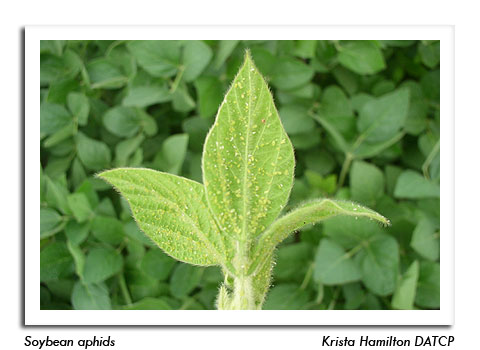
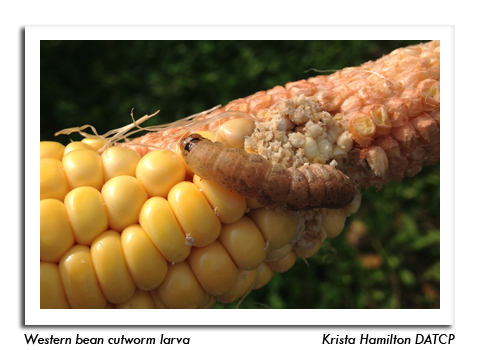
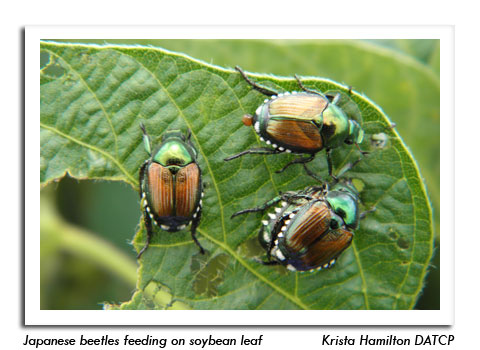
Volume 56 Number 20 Date 11/17/2011 PEST HIGHLIGHTS OF 2011 CORN ROOTWORM - The annual beetle survey in August showed a substantial increase in numbers as compared to 2010. Populations increased in seven of the nine agricultural districts and 27% of surveyed fields had economic counts of 0.75-8.9 beetles per plant. The 2011 state average of 0.7 per plant represents a more than two-fold increase from the historic low 2010 average of 0.3 per plant. Results of the survey indicate a high potential for root damage to continuous corn in the southern two-thirds of the state next season. SOYBEAN APHID - Densities did not attain economic levels in the majority of Wisconsin soybean fields in 2011. Eighty six percent of the 142 soybean fields sampled in July and August had very low counts of 0-25 aphids per plant, 11% had 26-50 per plant, and only 3% contained moderate counts of 51-103 per plant. The state average density of 12 aphids per plant was the lowest since 2004 and the second lowest in the nine-year history of the survey. BLACK CUTWORM - Delayed planting, late weed control and the largest moth migration in 10 years resulted in localized black cutworm problems this season. Larval progeny of the earliest migrants reached the destructive cutting stages by May 30 and infestations were noted in Dane, Dodge, Grant, Jefferson, Jackson, La Crosse and Vernon counties in early June. Damage estimates ranged from 3% cut plants to as high as 40% in exceptional fields. Insecticidal seed treatments labeled for black cutworm control proved ineffective in some instances and rescue applications were necessary. The threat from this early-season pest diminished by late June. WESTERN BEAN CUTWORM - Moth counts decreased significantly from the previous year, according to the statewide trapping program. The 2011 cumulative capture of 4,895 moths was a 55% reduction from 10,807 moths collected in 2010. Larval infestations resulting from the flight were also less prevalent and severe this year, although a few scattered fields had a fair number of larvae in the ears. JAPANESE BEETLE - Adults appeared during the week of June 20 and were numerous by mid-July. Reports of extensive damage to fruit and shade trees, field crops and ornamental plants were common in July and August. Populations in the southeastern, south-central and northwestern counties were higher than normal this season. Above-average rainfall in 2010, which favored the larval stages, and absence of sufficient natural control organisms appear to have been the basic reasons for the abundance of beetles in 2011. SPOTTED WING DROSOPHILA - A late-season trapping survey in October yielded two new county records. Six specimens were captured in an orchard near Gays Mills in Crawford County, 12 were collected at Stoughton in Dane County, and another two were trapped at McFarland in Dane County. The list of Wisconsin counties in which spotted wing drosophila has been found since 2010 also includes Racine County. --Krista Hamilton, DATCP Entomologist 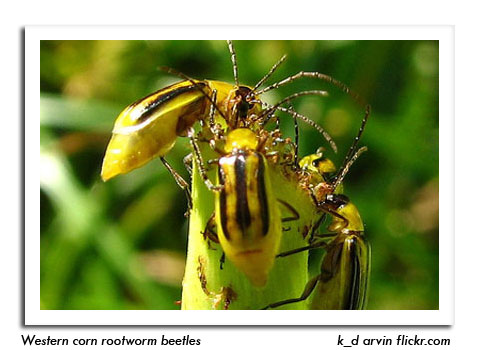

|

|