
|
|
|
Fruits
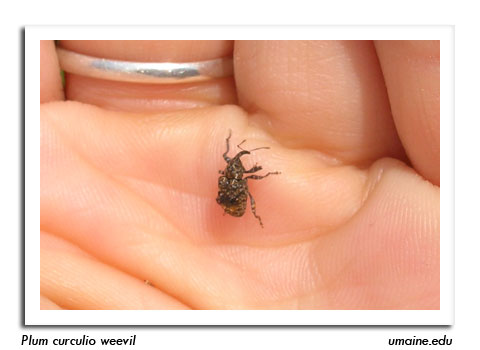
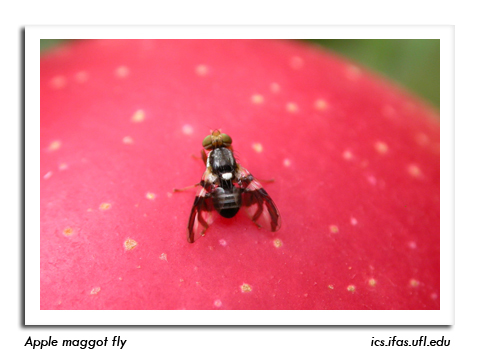
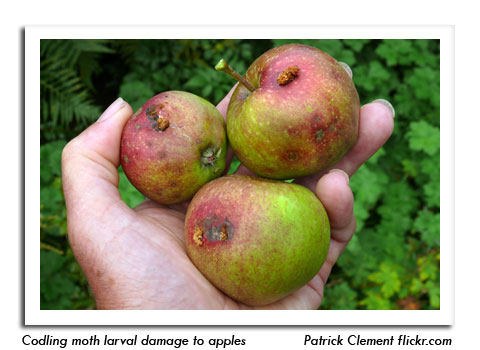
Volume 56 Number 20 Date 11/17/2011 PLUM CURCULIO - The spring migration of beetles into orchards began by mid-May and the first oviposition scars were observed on May 25. Beetle activity peaked from June 2-8. Populations were variable, with high numbers occurring in several southeast and south-central orchards. Controls were applied during the first two weeks of June and the migration ended by June 16 at most locations. A cooperator from Dane County stated that this insect was far more numerous and damaging in 2011 than in previous years. BROWN MARMORATED STINK BUG - Surveys in 14 apple orchards failed to detect this insect. Pyramid traps containing an aggregation pheromone attractant were monitored from June through August and no stink bugs were collected. Several adult BMSB were reported in Wisconsin in 2010, but established populations have not been detected to date. APPLE MAGGOT - The first flies of the season emerged during the period of June 23-29, approximately 2-3 weeks later than in 2010. Counts remained mostly low until mid-August when activity surged. By early September, fruit damage symptoms were apparent in orchard blocks where controls were inadequate. Most second generation codling moth treatments also controlled early apple maggot flies but serious damage occurred in a few locations. CODLING MOTH - Moths began appearing in traps from May 19-25. The spring flight peaked in the southern half of the state by June 16, although counts remained high at many sites throughout June. Signs of larval infestation were evident from June 30-July 14. Summer moths appeared in late July and controls were applied during the first two weeks of August. By most accounts, moth emergence was more predictable this season than last, resulting in better control. PEAR THRIPS - Economic damage attributed to this insect was reported from several apple orchards and vineyards in June. In Chippewa and Richland counties, standard insecticides were insufficient and damage in the form of abnormal leaf formation, leaf tatter, and flower injury resulted. Fruit growers in the state should become familiar with pear thrips and plan for scouting as part of their IPM programs for 2012. --Krista Hamilton, DATCP Entomologist 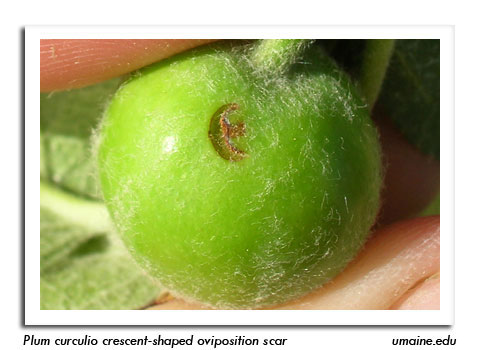

|

|